Skip to the main content.
What Size Law Firm Are You?

We've crafted solutions tailored to your firm

Insurance Glossary

The world of insurance for law firms can be confusing, and difficult to navigate. We've created this glossary because these common insurance terms should be easy to understand.

← Blog Home

When Nonprofit Boards Come Calling

4 min read

When Nonprofit Boards Come Calling

Look, I get it. An opportunity to sit on the board of a local nonprofit is finally yours for the taking. It’s a charitable cause you strongly believe in and an opportunity to get your name out there. So, of course, your desire is to say yes. Giving back to the community in a meaningful way in exchange for the marketing and business benefits that come as a result of donating your time seems like a win/win. Works for me as long as you remember our ethical rules are in play and, as a director of a nonprofit, so too are certain duties.

New call-to-action

Before discussing the consequences of accepting this opportunity, let me share one thought which may help you decide what to do. Sometimes nonprofits seek attorney board members because the nonprofit hopes the attorney board member will also be open to providing legal advice to the board or doing some work for the nonprofit. Things can get messy should you agree to wear two hats while serving as an attorney board member. The good news is there’s a solution here that will allow you to avoid so many of the issues I’m about to discuss. Keep it clean. Say no to sitting on the board and offer to serve as outside counsel on a pro bono basis instead. The opportunity to give back to the community remains and you have not lost the marketing and business benefits of being involved with the nonprofit.

That said, the title of board member can be enticing so it’s time to talk about the issues and I’ll start with your duties. The duties of an attorney-director are codified in some states and arise from common law obligations in others. There are duties of care, loyalty, and obedience and be aware that the attorney-director will often be held to a higher standard than non-attorney directors simply because he or she is an attorney. Here’s what you need to know. An attorney-director must be willing and able to devote sufficient time and attention to the matters of the nonprofit to ensure that all duties and responsibilities are discharged in good faith. In addition, directors must always act in the best interests of the nonprofit as well as be obedient to the organization’s founding principles. Stated another way, directors of nonprofits can be sued by donors for failing to hold true to the nonprofit’s mission. I share all this because the decision to sit on a nonprofit board is one not to be taken lightly.

However, as a risk management and ethics guy, I’m more concerned about the rules of professional conduct and how they play out in this setting. At the outset, many of the concerns I’m about to discuss can be easily avoided if you limit your participation to serving solely as a director and commit to never giving the nonprofit any legal advice, other than identifying situations where legal advice should be obtained. While not completely risk free, this approach will help minimize the concerns.

Despite my best efforts to convince them otherwise, the reality is many attorney-directors will wear two hats by agreeing to serve as a board member and to provide legal advice and/or professional services to the nonprofit. The consequence of making this decision is you must now address the issues of independence, conflicts of interest, and attorney-client privilege. I’ll start by asking a question. What if you are asked to put your attorney hat on for the purpose of taking an action on the nonprofit’s behalf related to an issue that you opposed while wearing your director’s hat? Stated another way, how can you as an attorney-director maintain professional independence and responsibly voice objections while serving on the board of a client? Navigating these waters can be problematic to say the least; but let’s cut to the chase. Never allow yourself to become a rubber stamp for the decisions of the board because sometimes what’s good for business doesn’t jibe with what the law requires.

Now I’ll add conflicts into the mix. Can you vote as a director on your own legal advice? I would encourage you not to; but wouldn’t having to abstain from voting as a director be a disservice to the nonprofit, particularly if this were to occur on a regular basis? What if the board decides to sue another client of your firm? What if you make charitable donations to the nonprofit and shortly thereafter you are hired by the board? While having some type of conflict of interest policy in place with the board can help, and I would strongly encourage you to see this is done, it will be an imperfect solution.

And finally, the attorney-client privilege problem. As an attorney-director many of your conversations will include business and legal advice. How will others know when you are wearing your attorney’s hat and when you are wearing your director’s hat? While you can try to address the problem by specifically noting in board minutes that your advice is strictly legal advice, if non-privileged business advice is also part of the discussion, you haven’t accomplished much. Making matters worse, there can be confidentiality problems because outside donors may have certain rights to review the board minutes and/or non-attorney directors may disclose the communication for business reasons. Either way privilege is lost. This is why it is so important for the attorney-director to fully inform the client and the board of the potential risks relating to loss of privilege and this should always be done in writing.

Please understand that my intent in sharing this cursory overview of the risks associated with sitting on nonprofit boards is not about trying to talk you out of agreeing to do so. It’s quite the opposite. I encourage you to get involved whenever this type of opportunity arises. Speaking personally, I believe that giving back to the community in this fashion is a wonderful gift for an attorney to give. My desire is to simply help you make an informed decision about how to give back in a way that will hopefully garner the greatest rewards for all involved. So, now that you know what you need to think about, go for it. Go out and make the world a better place. It really can be a fun gig.

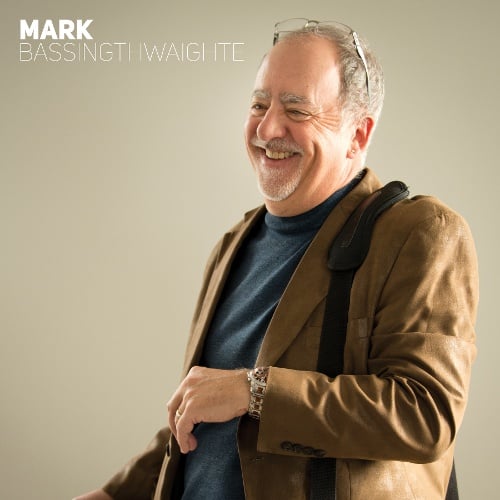
Mark Bassingthwaighte, Esq., serves as Risk Manager at ALPS, a leading provider of insurance and risk management solutions for law firms. Since joining ALPS in 1998, Mark has worked with more than 1200 law firms nationwide, helping attorneys identify vulnerabilities, strengthen firm operations, and reduce professional liability risks. He has presented over 700 continuing legal education (CLE) seminars across the United States and written extensively on the topics of risk management, legal ethics, and cyber security. A trusted voice in the legal community, Mark is a member of the State Bar of Montana and the American Bar Association and holds a J.D. from Drake University Law School. His mission is to help attorneys build safer, more resilient practices in a rapidly evolving legal environment.

Why Effective Client Communication Is all About Details and Documentation

6 min read

Why Effective Client Communication Is all About Details and Documentation

ABA MRPC Rule 1.4 Communication seems clear on its face. Attorneys are to keep clients reasonably informed about the status of their matters as well...

Read More
Prospective Clients and the Conflicts They Bring

2 min read

Prospective Clients and the Conflicts They Bring

In the legal profession, failing to properly manage conflicts of interest with prospective clients can lead to ethical dilemmas, compromised client...

Read More
Considering Limited Scope Representation? Don’t Play Fast and Loose with the RPCs.

3 min read

Considering Limited Scope Representation? Don’t Play Fast and Loose with the RPCs.

Let’s review the basics. ABA Model Rule 1.2 (c) allows a lawyer to limit the scope of the representation if the limitation is reasonable under the...

Read More