Skip to the main content.
← Blog Home

3 min read

AI in the Legal Industry: How Lawyers Feel About Generative AI

AI in the Legal Industry: How Lawyers Feel About Generative AI

Why ALPS Surveyed Lawyers About AI in the Legal Industry

ALPS recently surveyed legal industry professionals to learn more about how solo and small firm lawyers feel about the use of generative AI in the practice of law. We thought it would be fun to share their responses along with a concluding summary of takeaways. The "TLDR" is that while most private practitioners remain wary of the risks surrounding certain applications of generative AI, this tool is also a fantastic resource for small firms, when used appropriately. If, after reviewing these results, you feel compelled to reach out, please do so, or even comment on this post! We'd love to hear your thoughts as well. Now on to the results. 

1. Are you currently using AI in your day-to-day business?

80% of our respondents reported no.

2. Which AI tool(s) are you using?

Of the 20% of respondents who are currently using AI tools: 

  • 72% of them reported they were using the publicly available generative tools ChatGPT, Gemini, and/or Copilot.

  • 55% reported using the specialized generative AI tool Westlaw Edge, Lexis+ AI, or CoCounsel.


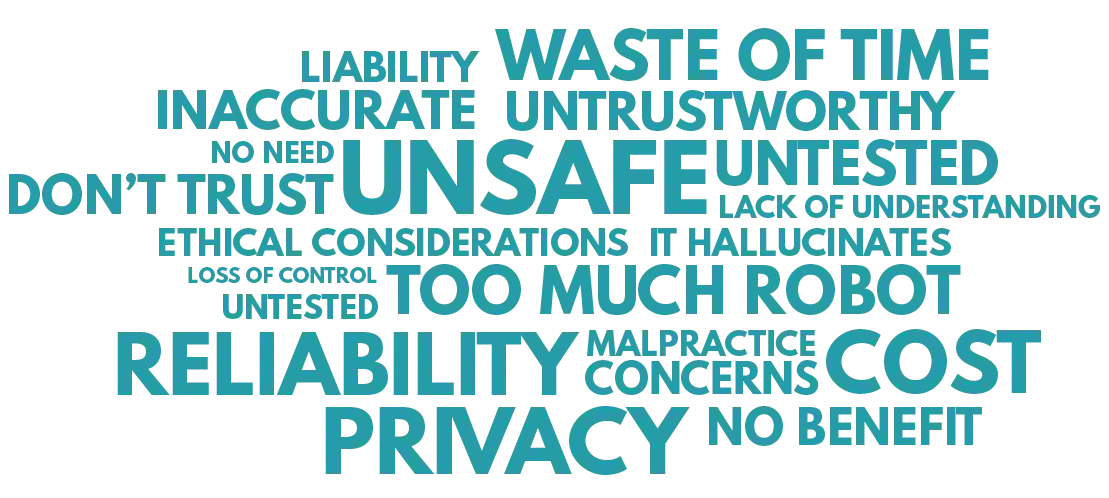
3. If you are not currently using AI, or have limited your use, what is keeping you from using AI?

The overwhelming majority of respondents expressed concerns with the accuracy and reliability of the output (the hallucination problem) or with the privacy and security of the tool. Two notable additional reasons shared included no perceived need for these tools and no idea how to use them.

Below is a word cloud covering a number of responses. 

Word cloud of reasons lawyers aren't using AI in the practice

4. How strongly are you considering using AI in the future?

  • 49% reported no current plans to adopt.

  • 28% are interested in using it but waiting for legal acceptance.

  • 16% are researching its usage possibilities.

  • 7% plan on adopting it within the next year.

5. What is your review process for AI-generated content?

Of those who are currently using generative AI, only one reported just running with the output. Everyone else reported varying degrees of review with the majority taking the time to thoroughly review the output, to include checking any and all citations (a trust but verify process).

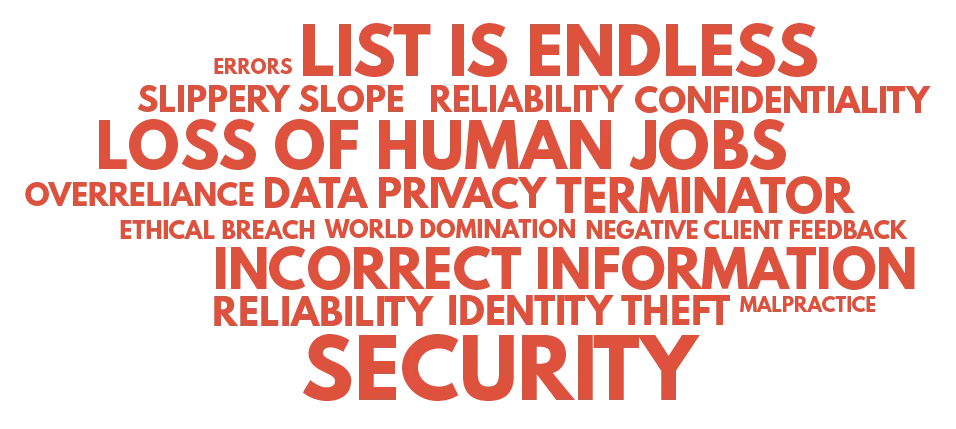
6. What threats do you foresee arising from using AI in your practice?

While the majority of answers to this question focused on ethical and malpractice missteps (inaccurate outputs, data privacy, and undue reliance), there were a few outliers that ran the gamut. Representative quotes include “The list is endless;” “It’ll take over the world like that one movie;” “Lack of accountability and the dumbing down of the industry;” and one that I thought was most interesting, “None”.

Below is another word cloud with some of the most popular responses. 

Word cloud of threats lawyers foresee when using AI

7. Do you think the legal industry is prepared to adopt AI?

77% of respondents thought no.

8. What are your concerns about using generative AI in the legal industry?

(Note that respondents could select more than one answer from a list of concerns.) In decreasing order, the concerns respondents found most troubling were:

  1. Ethical Considerations - 85%

  2. Output Accuracy - 81%

  3. Legal Compliance - 67%

  4. Data Security/Privacy - 62%

  5. Job Displacement - 27%

  6. Not Applicable - 2%

  7. I Don’t Have Any Concerns - 1%

9. Do you think AI has the potential to replace paralegals?

32% of respondents said yes.

10. How soon do you think AI will replace paralegals?

Of those who felt AI has the potential to replace paralegals: 

  • 0 respondents felt it would happen within the next year.

  • 59% feel this will happen in the next 2 to 5 years.

  • 33% think it will take 6 to 10 years.

  • 2% think it will be 10+ years.

11. Do you think AI has the potential to replace lawyers?

Here our respondents seemed to be a bit more optimistic with only 21% saying yes.

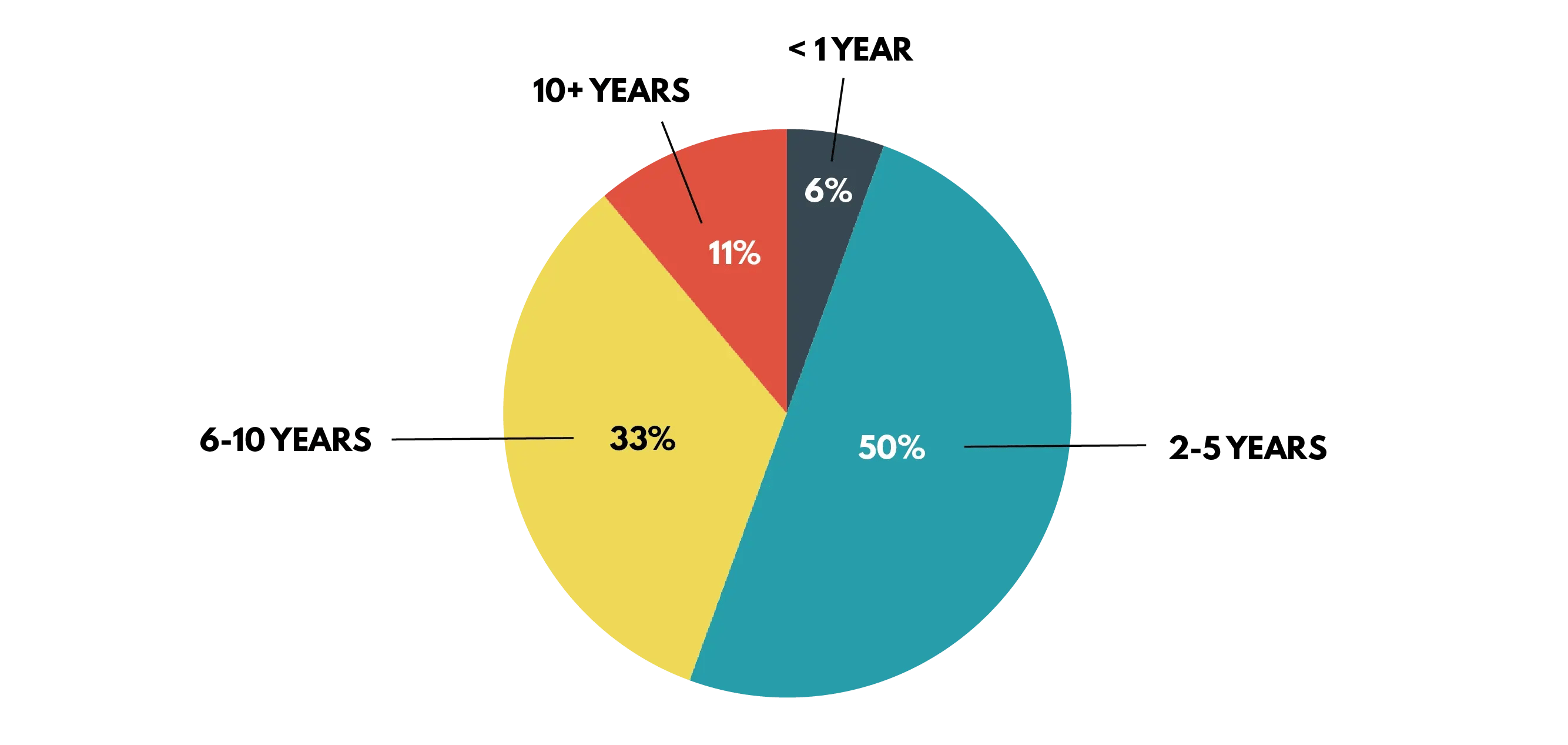
12. How soon do you think AI will replace lawyers?

For those who think their days in the legal profession are numbered: 

  • 6% think this will happen within a year.

  • 50% think it will take 2 to 5 years.

  • 33% think it will take 6 to 10 years.

  • 11% think it will be 10+ years.

Pie graph of how soon attorneys think AI will replace lawyers

13. Should any organizations be responsible for regulating, or coming up with standards, for the use of AI within law firms?

86% of the respondents said yes.

14. Which organizations do you think should be responsible for regulating, or coming up with standards, for the use of AI within law firms? 

  1. State Bar Associations - 73%

  2. The ABA - 54%

  3. Practice Area-specific Associations (i.e. Trial Lawyers Assoc.) - 21%

  4. It should be up to the firm to monitor - 19%

  5. Local bar Associations - 12%

  6. None - 11%

Key Takeaways for Lawyers Using Generative AI 

As I reflect on the results of this survey, they seem to suggest that most solo and small firm lawyers are approaching the use of generative AI with an air of caution and concern. And while an entirely appropriate response, I hope the concerns they expressed don’t turn into an excuse to try to completely avoid using generative AI. Of course, as generative AI becomes ever more integrated into the practice just like other technologies have been, trying to do so will become ever more problematic. That said, I’d like to share a final thought in the form of a quote from one of our respondents. I found this to be a voice of reason.

“Think of AI as like Lexis or Westlaw when they started offering digital libraries, or registries when they went online with their data. These are tools that make the practice of law better, but they are not a replacement for attorneys or the attorney mind. … AI is not entirely understood at this time, but being well versed and educated at the forefront of this emerging technology can give lawyers an edge that they otherwise would not have, (an ability to) compete with larger firms.”

I couldn’t agree more.

ALPS In Brief Podcast — Episode 29: Falling in Love with the Cloud

15 min read

ALPS In Brief Podcast — Episode 29: Falling in Love with the Cloud

On this special Valentine’s Day episode of ALPS In Brief, Mark sits down with Joshua Lenon, lawyer in residence and data protection officer for Clio

Read More
25% of Law Firms Have Been Breached

3 min read

25% of Law Firms Have Been Breached

What We Learned in 2021 In December 2021, Dave Ries, a frequent co-presenter with the authors, wrote an excellent summary of the cybersecurity...

Read More